AquaBox — Product information pack
How it works · Technical information · Supply and interfaces · Installation and maintenance
- Language
- English
- Version
- 1.1
- Prepared
- 2026-11-02

Review AquaBox underground rainwater storage for Kenyan projects. Connect source, demand, county and operating inputs to a defined supply request.
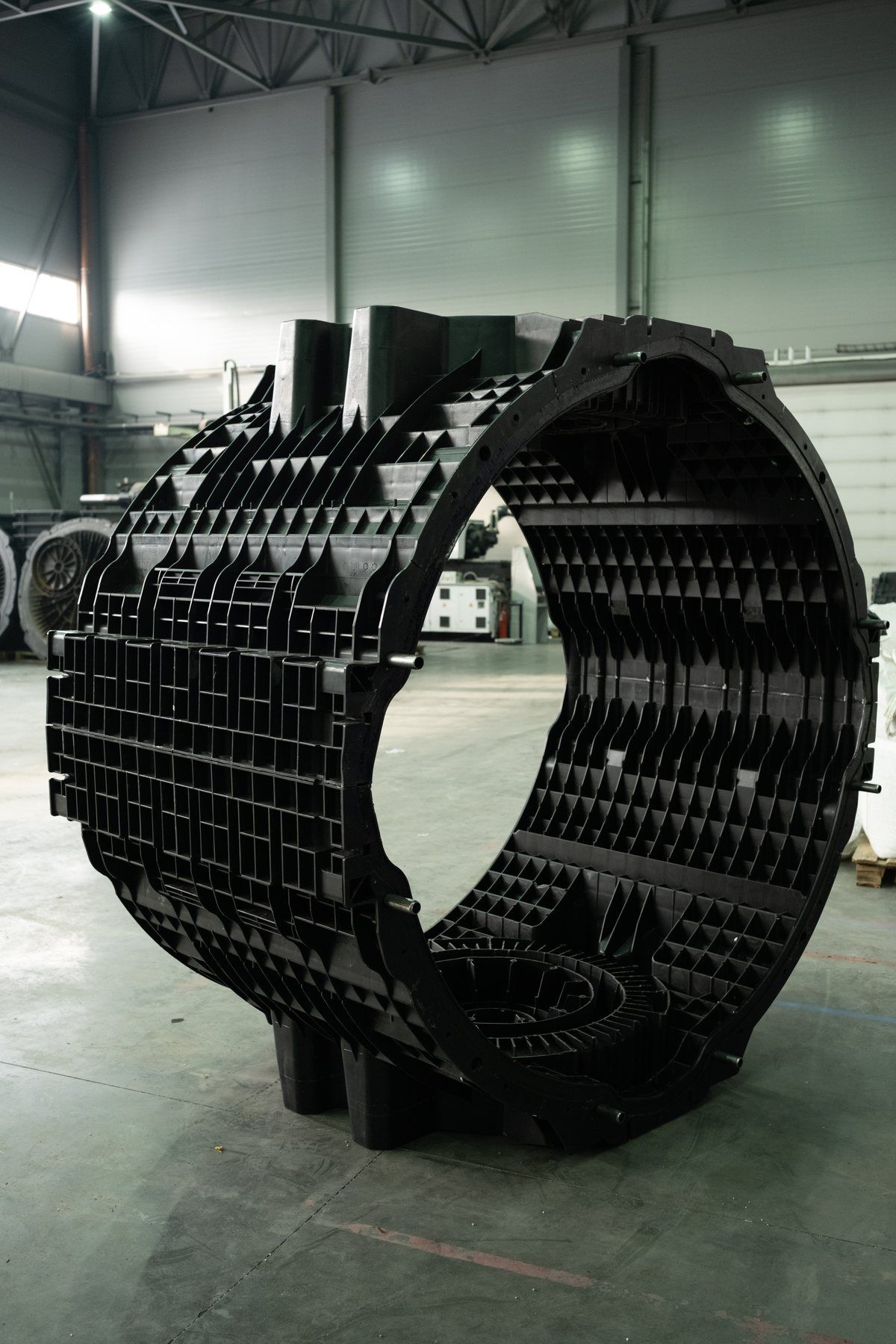
AquaBox is a tank assembled from injection-moulded polymer elements for collecting and storing water below ground. Storage can be connected to treatment or pumping equipment when specified.
Prepare an underground rainwater storage request for the Kenyan site's operating needs. Link available collection to demand, identify the county and delivery destination, and coordinate treatment, pumping and maintenance interfaces with the project team.
The catalogue illustrates tank sectors, side walls, covers and access necks, with horizontal and vertical arrangements. Inlets and outlets connect the tank to the water system. Internal mounting elements can support the equipment selected for the project.
The source catalogue describes tank sectors, covers, side walls, access necks and pipe-connection units. Mounting plates, partitions, ladders, treatment elements and pumping equipment depend on the selected arrangement. The quotation must identify what is included, optional or supplied by others.
Choose materials and equipment for the water being stored and its intended use. Potable use requires applicable evidence for the complete configuration and local requirements; it is not established by this overview. Loads, burial, watertightness and service life require configuration-specific evidence.
Coordinate the base, groundwater and uplift, connections and access with the responsible designers. The catalogue illustrates anchoring and internal equipment mounting, but does not replace project installation instructions. Keep inspection and equipment access available; agree cleaning and maintenance for the stored water and installed equipment.
Tank rings are assembled from modular half-ring elements and joined with bolted connections. The source describes a gasket or sealant at the joints and anchoring to a prepared base. These interfaces must follow the selected arrangement and project installation documents; the overview does not establish a universal foundation or burial limit.
For underground rainwater storage, identify the county, catchment, available rainfall or inflow record and intended use. Relate stored-water demand to changing operation over time, including overflow and any make-up-water arrangement. Keep the quality objective and treatment interfaces tied to that use. This helps a Kenyan project request distinguish reuse storage from a volume held only for drainage discharge.
State the delivery destination, construction stage and teams responsible for civil works and connected equipment. Where pumping is proposed, include power, controls, equipment access and the operating response to interruptions. Identify the county receiving-system interface and any relevant water-resource review for the actual works with the appointed specialists. Retain installation instructions, as-built information and maintenance responsibilities at handover.
These product information packs describe construction, functions, interfaces and source reference data. They are not certificates or approved installation instructions.
How it works · Technical information · Supply and interfaces · Installation and maintenance
Reference examples from the source catalogue; confirm the selected configuration before design or purchase.
| Catalogue volume (m³) | Body length (m) | Empty tank mass (kg) |
|---|---|---|
| 20 | 5 | 1180 |
| 40 | 10 | 2180 |
| 60 | 16 | 3180 |
| 80 | 21 | 4180 |
| 90 | 23 | 4680 |
| 120 | 31 | 6180 |
Only when it is explicitly listed in the quotation. Storage, treatment and pumping have separate equipment duties and interfaces.
Potability is not established by the product name or this information pack. Confirm materials, the complete configuration, water quality and applicable local requirements before specifying potable use.
The selected configuration and quotation define the tank elements, connections, access and any internal equipment. Ask for an itemised scope and exclusions.
Yes. Send your location, intended use and available drawings or volume information; mark unknown values as unknown.
Blank project brief, revision 2026-10-07. Record values, units, sources and open items; this worksheet contains no product specifications.
Download the editable project-input worksheet (CSV)