Size a solution for your site.
Send the volume, application, location and available site data. The project team will return with a recommended configuration.
REQUEST A PROJECT REVIEW →
UNITED STATES PROJECTS
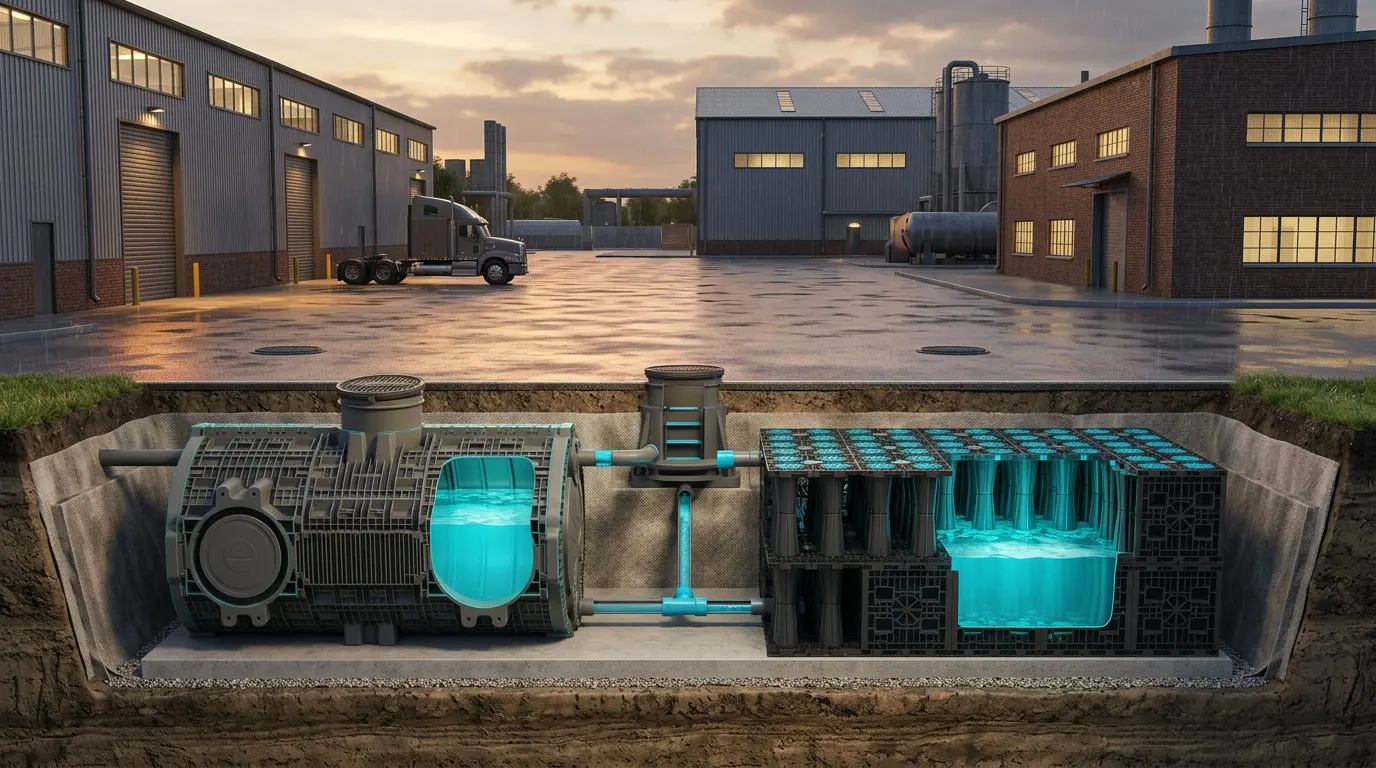 CAPACITY BELOW · SURFACE IN USE
Share the required volume, site constraints, loading, groundwater information and intended outlet or reuse duty. The project team can then identify the additional inputs needed for a project-specific review.
Each route explains the inputs required for a project review without asserting approval or compliance.
Buffer runoff before a defined outlet.
Explore solution → BlockTechAssess controlled return of runoff to the ground.
Explore solution → AquaBoxStore water for a defined project duty.
Explore solution → AquaBoxCoordinate water-quality and discharge objectives.
Explore solution →Send the volume, application, location and available site data. The project team will return with a recommended configuration.
REQUEST A PROJECT REVIEW →Dealers and engineering partners follow a separate qualification route. Application does not imply appointment or territory availability.
APPLY TO THE DEALER PROGRAM →Start with the required stormwater outcome and the criteria adopted for the project location. Record the rainfall source and design events, drainage areas, inflow method, allowable discharge or reuse demand, downstream and tailwater conditions, emergency overflow and maintenance ownership. NOAA's Precipitation Frequency Data Server is a public rainfall reference; the engineer and approving authority determine the dataset and method applicable to the project.
For infiltration, combine planning maps with field investigation. Review soil profile, tested infiltration behavior, seasonal groundwater, bedrock, setbacks, source-water risks and pretreatment. The USDA NRCS Web Soil Survey and USGS Water Data can inform early screening but do not replace project geotechnical or groundwater evidence.
Coordinate storage with survey, utilities, excavation, construction access, cover build-up, loading, inspection and safe exceedance routing. Public permitting and water-quality obligations vary by location; use the current US EPA NPDES stormwater information and the requirements of the responsible state and local authorities.